How to Make Your House Smell Good, Season by Season
Some houses just smell good — you walk in and the place has a personality before anyone says hello. That's never an accident. It's a small system, and it runs on about three candles at a time, rotated with the calendar. Here's the year-round playbook.
the entryway rule
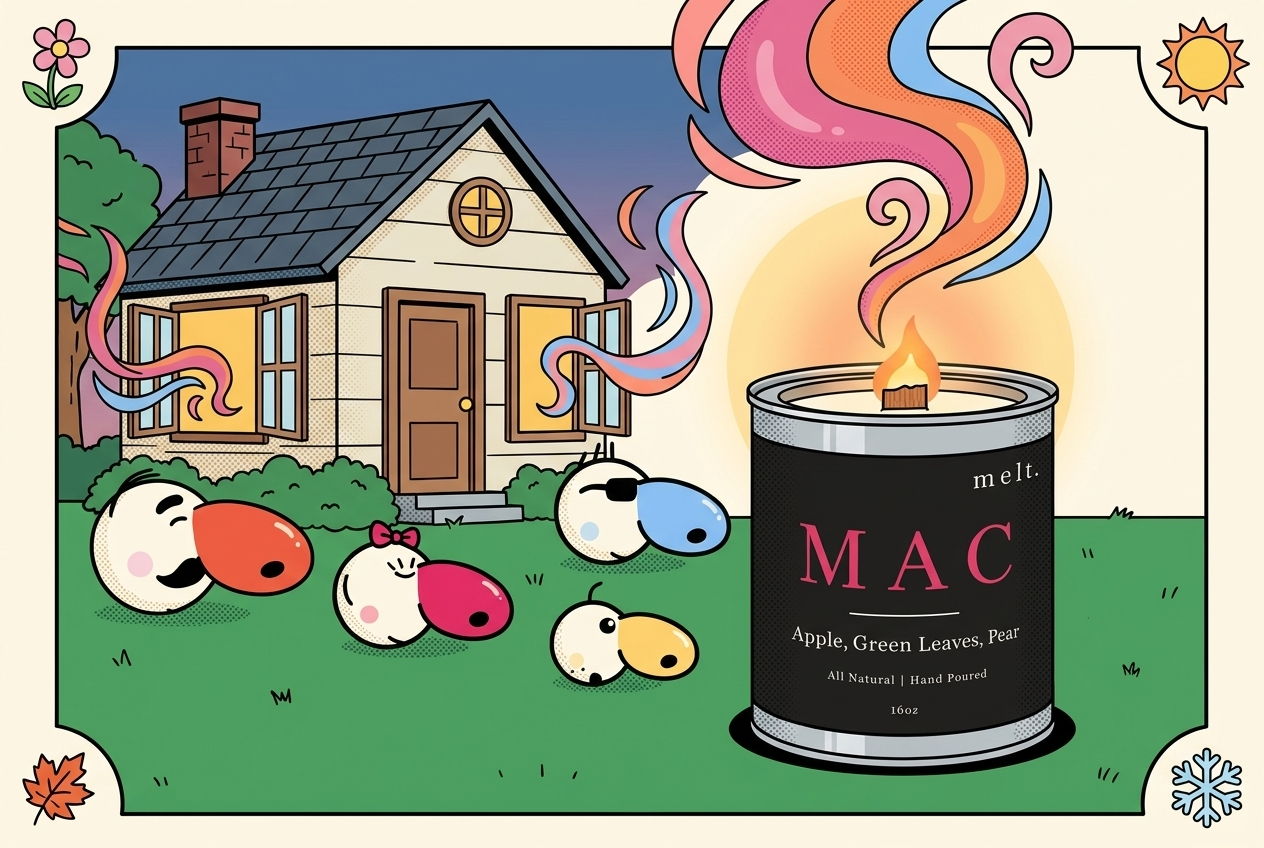
Whatever burns nearest the front door becomes "what your house smells like" in every visitor's memory — first sniff wins. Keep that spot stocked with your most crowd-pleasing scent (crisp fruit, soft woods, clean florals) and rotate it seasonally. The rest of the house can be as personal as you like; the entryway is your home's handshake.
the seasonal rotation
- spring — florals and green notes: peony, lilac, fresh leaves. windows-open energy even when the windows are closed.
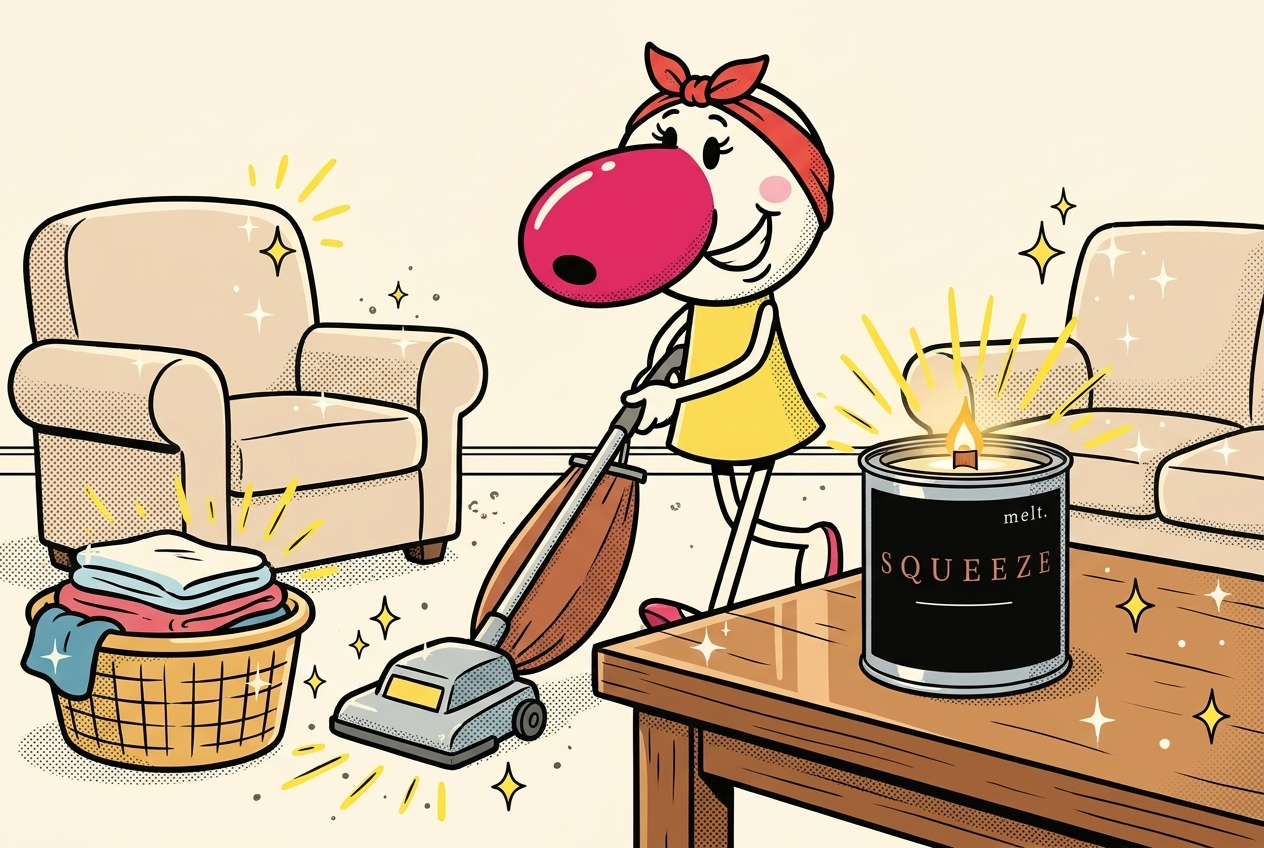
- summer — citrus and fruit: loops, squeeze, anything that smells like a drink with a paper umbrella.
- fall — spiced apple, flannel, woods: the season candles were invented for (full rankings here).
- winter — deep and warm: bourbon, tobacco, smoke, evergreen. hibernation, but make it luxurious; after dark is the mood.
the three-candle system
At any moment you need exactly three active cans: the entryway ambassador (crowd-pleaser), the daily driver (kitchen or living room, your actual taste), and the evening specialist (bedroom or bath, soft and personal — see the ritual guide). Three jobs, three cans, zero scent chaos. When one retires, its replacement is a small seasonal event.
the layer-cake extras
Between burns: lids on (paint cans hold their scent in storage — a closet with an open melt. can inside is a scented closet, free of charge). Simmer-pot days and open windows reset the palate. And twice a year, burn nothing for a weekend — your nose recalibrates and your candles all get louder. Restraint is a fragrance strategy too.
Build your rotation from the full lineup, mood by mood — or let the quiz pick your daily driver and build outward from there.