Hand-Poured Candles vs Mass-Produced: What You're Actually Paying For
"Hand-poured" is printed on our labels, and if you've ever wondered whether that's a real thing or just artisanal set dressing — fair question. Here's what actually happens differently when a human pours your candle, and why it shows up in the burn.
what hand-poured literally means
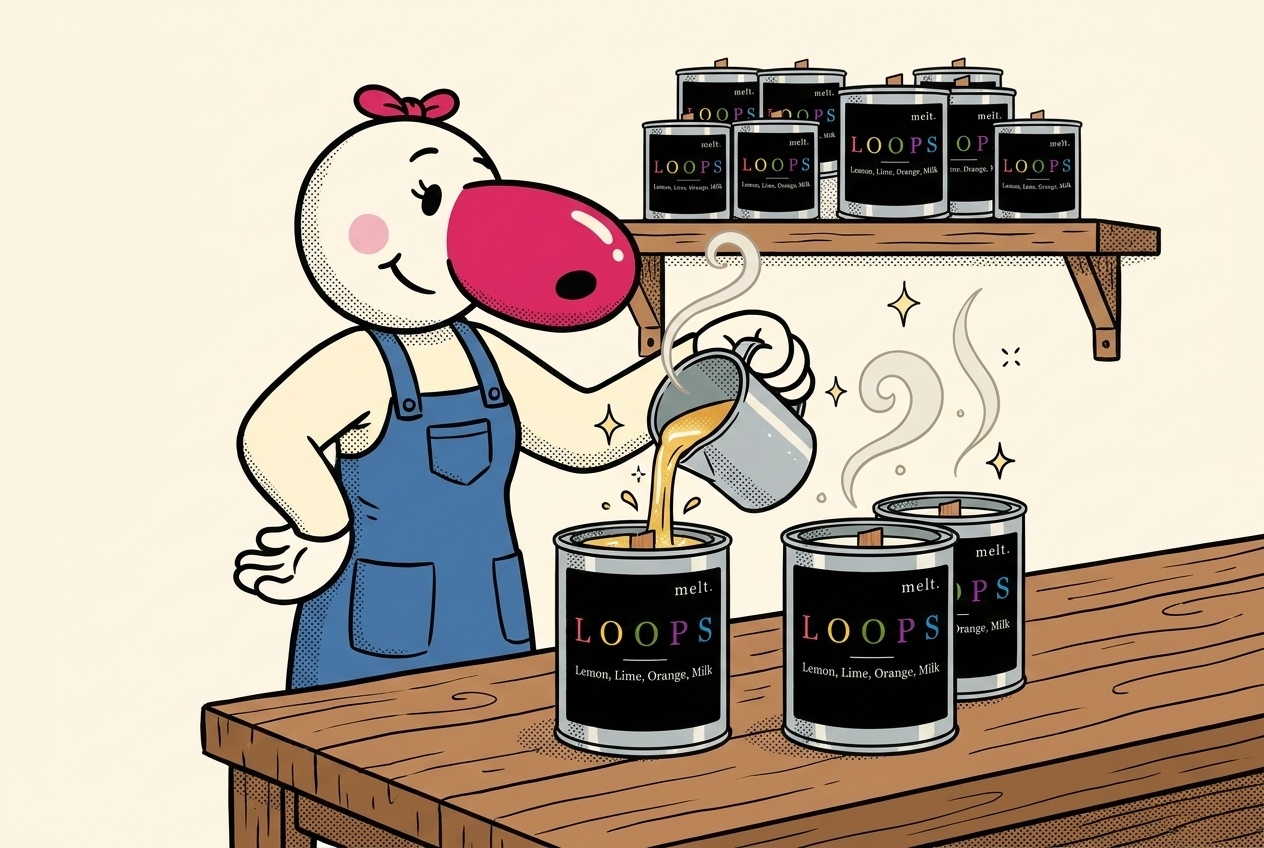
Small batches of wax, heated to a precise temperature, fragrance added at the exact window where oil binds best, poured into cans by a person, and left to cure on a rack — not a conveyor. At melt., that person is the founder (her official title around here is boss nose, and she approves every scent before it ships). When something's off — a cloudy pour, a leaning wick — it doesn't ship. That's the entire quality-control system: a human with standards and a good nose.
where factories cut corners you can smell
- fragrance timing. add oil too hot and it burns off before the candle's even sold; too cold and it never binds. factories optimize for line speed. small-batch optimizes for the bind — which is why hand-poured candles typically smell like something all the way to the bottom of the can.
- fragrance load. oil is the expensive part. mass producers trim it to hit price points; small makers max out what the wax can hold.
- cure time. soy wax needs days to marry with fragrance before first burn. warehouse math hates waiting. we wait.
- wick placement. a centered wick burns even; a machine-set wick that drifted 3mm tunnels forever. a human notices.
the honest trade-offs
Hand-poured costs more per candle — real oils, real cure racks, real wages. And natural small-batch wax has personality: frosting, slight texture, tiny batch-to-batch variation (why yours may look subtly different from the photo — that's a feature, explained here). If you want identical sterile units, factories are great at that. If you want the candle to smell rich at hour thirty of its life, that's the hand-poured tax doing its job.
how to tell what you're holding
Check for: named wax, named wick material, phthalate-free oils, batch quirks acknowledged, and an actual human story. Then burn it — the second half of the candle is where mass production runs out of perfume and small-batch keeps going. Compare for yourself: the whole hand-poured lineup, or start with whatever the quiz says you are. boss nose poured it either way.