Soy Candles vs. Paraffin: Why What's In Your Candle Actually Matters
Most people pick a candle based on how it smells. But what it's made of determines how it burns, how long it lasts, and what you're actually breathing in your home. Here's the honest breakdown.
What Is Paraffin Wax?
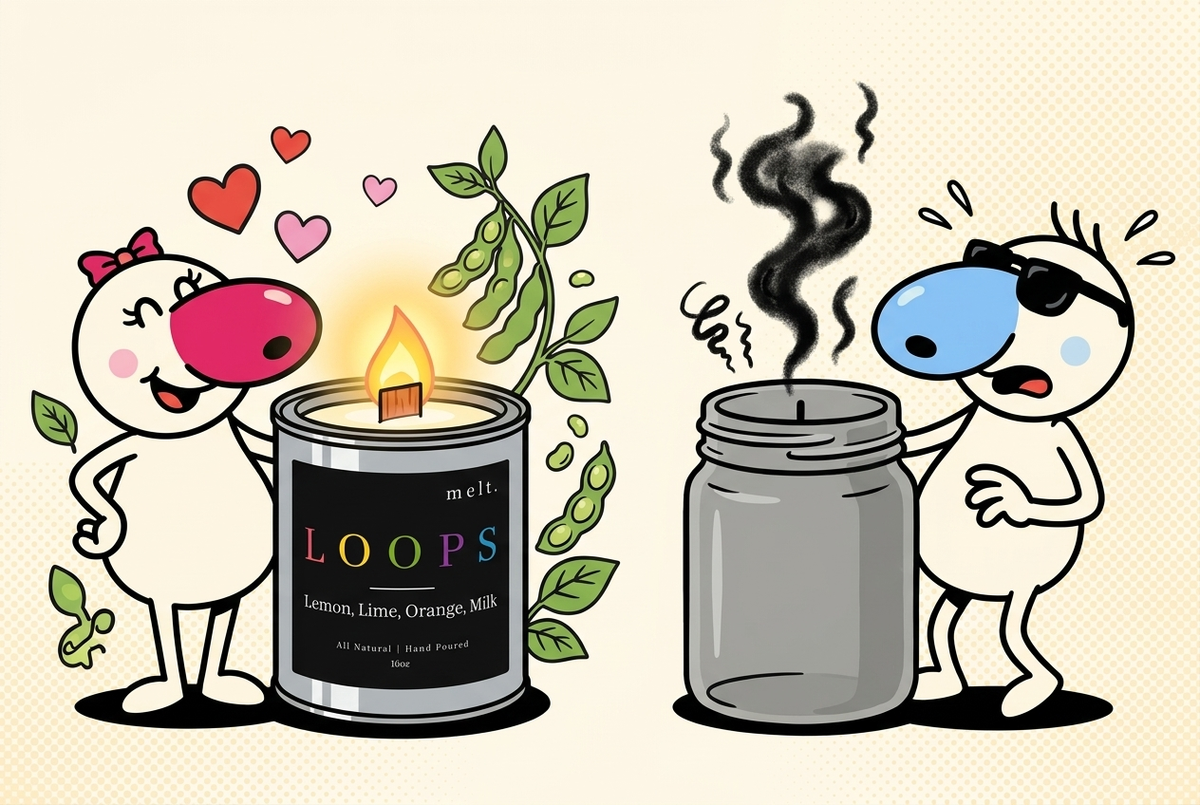
Paraffin is a petroleum byproduct — it's what most mass-market candles are made from. It's cheap, it holds fragrance well, and it gives candles a bright white appearance. The downside: when burned, paraffin releases small amounts of soot and can emit compounds like benzene and toluene. In a well-ventilated space this isn't dangerous, but it's not ideal either — especially if you burn candles daily or in a small room.
What Makes Soy Different?
Soy wax is made from hydrogenated soybean oil — a natural, renewable resource. It burns cleaner than paraffin (less soot, no petroleum byproducts), burns slower (which means a longer-lasting candle), and releases fragrance more gradually. That gives you a better scent experience over time rather than a sharp hit upfront that fades quickly.
The tradeoff: soy candles cost more to make, which is why they're priced higher. That cost reflects real ingredients — not a markup for aesthetics.
What About Fragrance Oils?
The wax is only part of the equation. Some synthetic fragrance oils include phthalates and other additives. Look for candles that use phthalate-free fragrance oils — the label or product description should tell you. If it doesn't mention it, ask.
Why We Use 100% Soy Wax
Every melt. candle is hand-poured in small batches with 100% soy wax and phthalate-free fragrance. Not because it's trendy — because it's the right choice for a candle you're burning in your home, around the people you love.
If you've been buying mass-market candles and wondering why they don't smell as good or burn as long, this is usually why.
Find your perfect soy candle with our scent quiz, or browse the full collection.